MPJE Isn’t the Finish Line: It’s the Starting Point for Pharmacy Leadership
- Kayla Copeland
- Oct 30, 2025
- 3 min read

The Future of Pharmacy Depends on What We Know—Not Just What We Dispense
Pharmacy students are taught the science of medicine, the art of counseling, and the ethics of patient care — and yes, they study law. But too often, it’s approached as a checklist for passing state exams instead of a foundation for real-world decision-making.Understanding the intent behind legislation — not just the statutes — is what separates memorization from mastery. Whether you plan to work in a hospital, a community setting, or an institutional practice, the laws that govern pharmacy benefit managers (PBMs), reimbursement, and appeals directly shape how you practice and how your patients experience care. Pharmacy law isn’t just for compliance. It’s the rulebook for how we advocate, collaborate, and sustain patient access in every setting.
Why State Laws Matter—Even if You’re Not in a Community Pharmacy
Every prescription crosses the PBM system. Every reimbursement rate, every formulary exclusion, every delay in payment ripples across settings—from independent pharmacies to hospital discharge units and long-term care facilities. When PBMs underpay or delay reimbursement, institutional pharmacies feel it too. Budget shortfalls lead to tighter staffing, limited formularies, and reduced access for patients. When legislation like Tennessee’s HB 1244 or Iowa’s SF 383 is passed, it doesn’t just protect storefront pharmacies—it reinforces the sustainability of entire health systems. These laws are meant to create accountability. They require PBMs to respond to appeals, disclose pricing sources, and honor fair payment timelines. But a law only has power when it’s understood and applied. That’s where knowledge becomes advocacy.
From Legislation to Implementation: The Role of the M.O.M. Manual
Through my work, I developed the M.O.M. Manual (MAC Operational Manual) to bridge the gap between policy and practice. The M.O.M. Manual teaches pharmacies how to operationalize state laws—turning complex regulations into actionable workflows. It shows teams how to build strong documentation, track reimbursement changes, and escalate appeals when laws aren’t followed. This same mindset can serve pharmacy students. By learning how these laws function—how appeals are structured, how oversight is enforced—students develop the tools to identify inefficiencies, communicate with policymakers, and advocate for patient access within their own practice sites. Understanding legislation transforms future pharmacists from passive participants into informed change agents.

Connecting Policy to Patient Care
Legislation doesn’t sit in a courtroom—it impacts patients every day. When reimbursement delays cause stock shortages, patients wait longer for life-sustaining medications. When appeals are ignored, pharmacies must absorb losses, sometimes forcing them to stop carrying certain drugs. With the reality of not being able to provide care for that patient. As student pharmacists, recognizing this chain reaction—how policy affects practice and how practice affects patients—is essential. By engaging early with legislative updates, students strengthen their clinical reasoning with operational awareness.This awareness fosters better interdisciplinary relationships too. Hospital pharmacists who understand PBM limitations can better coordinate with outpatient teams. Clinical pharmacists aware of prompt-pay laws can help administrators ensure compliance and sustainability.
The Call to Future Pharmacists
Our profession needs leaders who don’t just fill prescriptions—they fill the gaps between legislation and application. Pharmacy education should include legislative literacy as a professional competency. A pharmacist who understands how to interpret and apply state law is better equipped to defend access, sustainability, and quality of care.If you’re a student, start now:
• Follow your state’s Board of Pharmacy and Department of Commerce updates.
• Read summaries of laws like Tennessee’s HB 1244 or the Prompt Pay Act of 2025.
• Join your state pharmacist association—they are your strongest advocate.
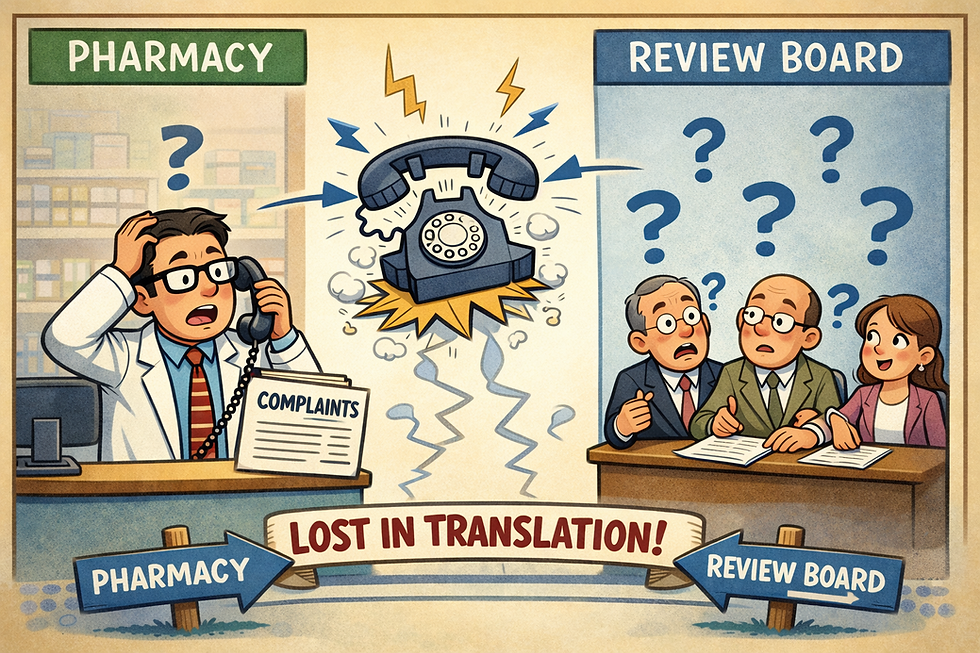
• Learn the appeal and complaint processes.
These are tools of accountability, not conflict.
Change doesn’t begin in the capitol—it begins in the classroom, with students who choose to learn the 'why' behind the laws that govern their future.
Knowledge Is the Strongest Advocacy Tool
Pharmacy’s future isn’t only clinical—it’s structural. If students understand legislation today, they’ll protect their profession tomorrow. The next generation of pharmacists must see themselves not only as caregivers but as compliance architects, advocates, and educators. You don’t need to wait for graduation to make an impact. The law is already written.
The opportunity is already here. All that’s missing is you.

Comments